Enarane, The Gaffer, The Metamorphose
Enarane, the metamorphose, gathered and sorted the essences of the universe, determined to understand each and determine the essence most suited for creation. He identified twelve essences (Fire, Wind, Water, Earth, Taste, Scent, Light, Sound, Thought, Life, Emotion, Beauty) and set out to explore the capabilities of each. But being omniscient, he realized he did not need to be everywhere or anywhere. He could create different worlds and the basic life forms to inhabit them, and then create aspects of himself with ability to think independently and interact with creation in unexpected ways while he observes and contemplates.
Hence Enarane is the One Who Watches. Completely neutral and impassive, he studies, measures, and learns. Rarely he will create something new to test what he has learned. Mostly he is, content to be and to learn.
Essicaelia
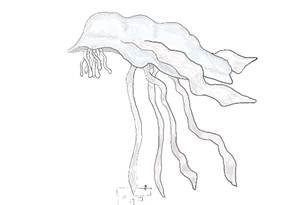
Enormous, diaphanous creatures (at least it is commonly believed they are animal, though there is much that is plant-like about them) that live in the skies of Gelfestiir. While not ubiquitous, they are common enough, especially around cities, that most people hardly notice them anymore.
Their bodies are composed of thin, translucent membranes that are silky and dry to the touch. They have a large, central mass, though nothing can be seen within that could rightfully be called organs. Several sets of protrusions are typical, beginning with a cluster smaller, thicker, almost tentacle-like filaments emerging from what is generally considered its head that appear to be capable of independent movement. Near the center of the mass emerges a set of four to seven ribbons that hang downward and flow with the surrounding air. From either side of the creature’s flanks extend thicker ribbons that both move with the air and move autonomously.
Essicaelia float or hover, sometimes flowing along with the breeze, sometimes moving against it. Almost never is one seen in extreme weather, however. They seem to possess an innate sense of changing conditions and leave an area before the arrival of weather severe enough to potentially damage them. They generally remain in a altitude range from just above the ground to a few thousand feet in the air, though they will go higher for reasons known only to them. The do not touch the ground, though they will sometimes drift low enough that their central ribbons will brush against trees or buildings. Oddly they never seem to get stuck on anything
The creatures show little indication of intelligence, and barely any indication they are alive at all. And yet some believe there is a pattern to their migrations. Those who study them have noted that there will usually be an essicaelia around when great events occur. Other times they will be seem almost obsessed with individuals or single buildings, though no one can determine why. Sometimes they appear to follow Inquisitors around; other times they almost seem to be avoiding them.
It is generally accepted that essicaelia are harmless, and neither a bad or good omen. They simply are, and if they have any purpose to their existence there is nearly no indication. An essicaelia in close proximity may be a little unnerving; otherwise, they are no more a concern than grass, or birds flying overhead.
Inquisitors
The Inquisitors are Enarane’s catalysts, given sufficient power to interact in powerful ways with his creations, though oddly they tend to shy away from using that power. Rather they tend to move from world to world among the mortal entities, observing, learning, and interacting with individuals. In many ways they are more like patron saints than gods.
Some individuals are able to attune themselves to the inquisitors—sometimes without any knowledge of doing so—and channel their power. The inquisitors are aware of this and usually allow it, but have been known to withdraw their power if the practitioner’s actions or approach offends them in some way.
There is no specific number of inquisitors. Each was created by Enarane from a combination of aspects of his own being, so each is unique in personality and perspective. This world, however, has only attracted the attention of a small fraction of these inquisitors, and even fewer that spend significant amounts of time here. As a result a number of religions have grown up around these more frequent visitors, which they also allow, even encourage, so long as the adherents do not displease them. Those who do will experience correction to varying degrees of severity as needed, including death on occasion.
Masamune (Black Samurai) – War / protection / honor
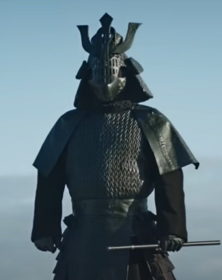
Masamune carries a wooden flute of ebony, banded with gold, which can transform instantly into any weapon he desires. Seldom seen in cities, and most often seen on battlefields, he frequently counsels with one side or another prior to the battle, but never joins in the combat on either side. He will defend himself if attacked, and defeats enemies with blinding speed and martial prowess, seldom employing more violence than necessary, and killing only when left little other choice.
Those who encounter him in travel find him a generous host and a pleasant guest. Though not verbose, he upholds his side of conversations while frequently turning the focus back on those with whom he converses, genuinely interested in their lives. But while he visits with mortals he never stays. He does not sleep, and seldom stays more than a few hours before moving on, often playing tunes on his flute.
Tahmer (The Pilgrim/Preacher) – Love / seeking / truth
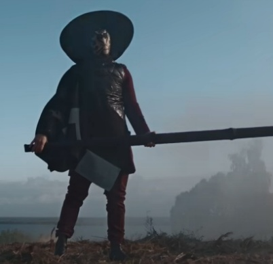
The Inquisitor one is most likely to encounter, he seems to genuinely enjoy human company. He can be found anywhere there are people, though enjoys random solo encounters in the wilderness as much as with groups in cities. If he displays any preference in company at all it is children; he will drop whatever he is doing to meet children and share stories.
He wears what all assume is a patterned mask with a vaguely human design, a wide brimmed hat, and carries a trembita (made from a spruce tree that has been struck by lightning) that many mistake for a staff, but is actually a wind instrument similar to an alpenhorn, with a powerful, resonant sound that can be heard for miles. Though appearing awkward to carry, he never seems to struggle with it. He carries several pouches and bags that no one has ever seen inside.
Like many others of his folk, Tahmer does not stay anywhere for long, though he will sometimes accept accommodations overnight. He does not eat, however, or at least no one has seen him do so. His voice varies, taking on different pitches and timbre at will, and he can imitate any voice. Much of this ability is put to use in his storytelling. Some are also convinced that he employs magic in his storytelling, but not from any illusions. Many insist that their emotions are heightened when listening to his tales, and others claim to experience much more vivid imaginations when picturing his stories in their heads.
Interestingly enough, Tahmer is more likely to outright kill an enemy than Masamune, though this is nearly always to protect others rather than himself.
Olvobus (Bullman) – Plains / travel / earth
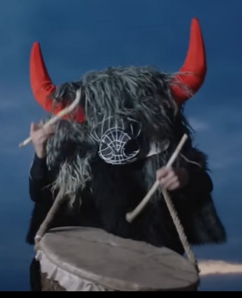
More rarely seen than most inquisitors, Olvobus is content to roam the plains of the world alone. Looking much like an upright buffalo, and standing over nine feet tall, it is an imposing figure with a long stride. Even those brave enough to try to approach it have difficulty keeping pace.
It neither seeks nor avoids mortal company, though it does avoid settlements of any kind. It does not speak any recognizable language, and yet those it talks to somehow understand. However, it speaks only rarely, and one can seldom be certain it is listening. The foolish will assume it is not intelligent.
It carries a drum always and often beats a cadence while it strides across the land. It carries no weapons, but few have provoked it to a primal rage and lived to talk about it. Most, however, find it quiet and gentle, if not very good company.
Tse (The Empty One) – Death / The Void / Time

Tse is never seen to travel; it only appears, usually in strange places and in bizarre, often macabre poses. In all other ways it looks humanoid, but where its clothes suggest a head there is only darkness. When it speaks, it is with no visible mouth, and with a voice so impossibly low it is more felt than heard.
It is uncertain why Tse has become associated with death, as its appearances seem to have no correlation to the deaths of those to who it appears. Those who encounter it report feelings of intense emptiness, loneliness, insignificance or timelessness. Even the stoutest of souls leaves such encounters drained, shaken, ill-at-ease, even slightly mad.
And yet some who meet with Tse have had deep, stimulating conversations, learning much and feeling the wiser for having made the effort. Seldom will it reveal the future or recommend any particular path, but it has experienced and seen much, and may offer significant insights. But in most cases Tse simply observes, entirely unperturbed by any aggression or threat. Those who have attempted assault wake up some time later, never quite whole again.
Reldartuin (Stag-head) – Forests / seasons / the lost
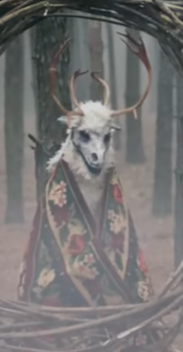
No one is entirely sure what Reldartuin looks like, as all but its shaggy, multi-horned, deer-skulled form is concealed beneath a long, full, multi-colored cloak. Both the cloak and the color of its fur alter with the seasons.
Seen only in the deepest parts of forests, in all times and seasons, but usually only from a distance. Though Reldartuin moves slowly and majestically no one, no matter how swift of foot, is able to catch up with it unless it is willing. Mostly it stops for those who are truly lost or defenseless, seeing them safely from the woods again, though sometimes it will grant audience to those who seek it out.
Those who seek Reldartuin with ill intent most often are never seen alive again, and only rarely are any remains found. There are unverified reports from witnesses who describe the very forest itself coming alive to slay and absorb those Reldartuin takes a dislike to, or who threatens the lost or defenseless under its protection. Others are simply devoured by unusually large or numerous or voracious beasts before they ever even see the inquisitor.
Erestyrin (Owlman) – Wisdom / wind / art
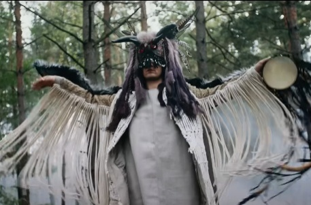
Most often seen as an actual owl or immense eagle (or occasionally something significantly smaller), but will assume his human-as-bird appearance when interacting with mortals. Those interactions are rare, however, as he does not wish to be seen as an oracle or a shortcut for finding truth for oneself. More often his appearances are in support of art, whether offering encouragement or inspiration, or more material assistance.
Erestyrin is one of the few inquisitors known to take openly aggressive action. Often it is to protect wildlife he feels threatened by mortals in some way. Other actions seem to come without cause or provocation, not even to influence major events or threats. His reasons are known only to him. Where general consensus is that the inquisitors are neutral and largely uninvolved, no one is certain of Erestyrin’s motives or objectives, or even if he has them.
Viriena (Queen of birds/fish) – Life / animals / water
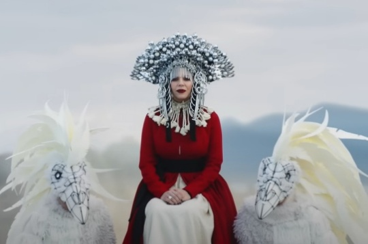
If there is a leader of the inquisitors on Gelfestiir it is Viriena. Inquisitors are generally solitary, but all of them seem to consult regularly with Viriena. Many mortals who encounter Viriena fine one or more other inquisitors in attendance as well, and not just her chorus.
But why this may be is uncertain. She remains as much or more separated from mortals than other inquisitors and spends much of her time in the wilds. And yet she is also one of the more welcoming of mortals and is known to “hold court” in a single place long enough for people to become aware and make a pilgrimage to see her.
She is never alone. Even when her chorus is dispatched elsewhere on her business, she is always accompanied by a pair of humanoid-like versions of natural creatures (some rumored she transforms actual creatures to be her escorts for a time). There will also often be normal animals in attendance.
In spite of all this, most who go to meet with Viriena in search of advice, prophecies or wisdom leave unfulfilled. She usually listens more than she speaks, and her responses are often cryptic. Those who seek healing, however, are often rewarded, especially those who meet her criteria as most deserving. Those who approach her with demands are dismissed with force to match their rudeness.
The Chorus – Messengers / unity / youth

Often seen attending Viriena, they serve her in a variety of ways. Sometimes they function as her voice, speaking as one her responses to petitioners. Usually they function as escorts of petitioners, crowd control, and sometimes even security. While appearing small and child-like, they are immortal and possess powers of their own.
Other times they are dispatched on errands for Viriena, traveling in pairs or as a group. They can be found in all parts of the world, in all weather, in all circumstances, pursuing any number of missions from delivering messages to obtaining specific items and performing specific actions. (Names: Zegen, Taal, Nisrum, Volgiss, Larss, Davon, Ritna, and Pelin)
Arihama (Ragman) – Dance & music / curiosity / humor
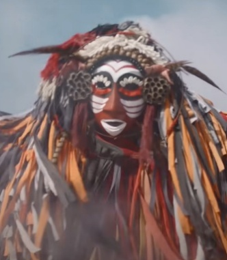
Perhaps the most comical-looking of the inquisitors, Arihama resembles a painted man made of strips of rag on spindly legs. He appreciates, even invites the company of mortals, especially those who dance or create music. But for all his interest in people, he keeps to the wilderness, avoiding settlements any larger than a hamlet.
Arihama has a voice, but only for singing. He speaks no words, communicating only through music and gestures. He will open revelries with anyone who is willing, and will enthusiastically participate until the last mortal drops. While they sleep he quietly slips away to continue on his way again.
The only magic he tends to display manifests only in the amplification and enhancement of music (such as voices and instruments joining from nothing, granting of added skill and ability for a period of time, etc.), with the exception of some defensive magics—though he possesses a dance style that functions as a martial art quite effectively. He is able to deliver a beat-down the looks like a continuation of the singing and dancing.
Zerich (Snarlface) – Passion / fire / trickster
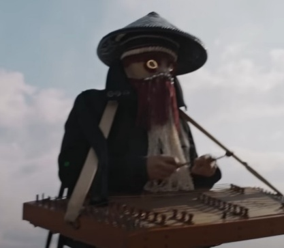
If there is an evil inquisitor, Zerich comes the closest to it, though he is not so much evil as chaotic. His passion knows little restraint, his tricks sometimes cross the line into maliciousness, and his love of fire poses a threat to those around him. He is impulsive and irresponsible and loves to observe the chaos he unleashes.
Zerich will be found more often in larger settlements, as more people mean more targets for his fun and more opportunities for mischief. There he will also reveal his passionate side, growing deeply infatuated with persons and objects of beauty, oblivious to his physical and personal repulsiveness. His poetry and his dulcimer playing can sometimes sway the objects of his affection, but those who give in to his advances ultimately regret it.
Oddly, where one would expect him to be the most dangerous when attacked, passion recognizes passion and he can be unexpectedly merciful. Similarly, he is known to assist others in their pursuit of their passions. Those who push him too far, however, do so at great peril.
Ornestran Empire
Comprised of Ornestra, Solodimir, and Chresis, and governed from the capital of Ircastra, the Empire is in its twelfth decade since Ornestra conquered Solidimir and annexed Chresis soon thereafter. Founded by Emperor Karlos Volcapria III, the Empire now controls most of the trade along the Avenflood River and all access to the interior of the Prosipir Valley. Trade over the Sea of Casselome is more complicated, and most of the time countries will not interfere with it.
Ornestra
Though the largest of the Westsea countries, the broad plains were once five smaller lands: Ornestra, Tremaer, Laidelon, Nirendal, and Ephelis. Ethedron the Just unified the lands under his own banner over two hundred years ago, and the next eighty years of the dynasty were devoted to quelling the unrest and integrating the peoples. Today the old internal divisions barely exist, and Ornestra is largely at peace.
Solodimir
Nestled at the eastern end of the Prosipir Valley, Solodimir has never been a rich enough country to attract attention, and even Ornestra was content for a long time to leave them be and engage them in trade. Unfortunately as the primary source of timber for itself, Chresis, and Ornestra they over-harvested their forests until all that remained was in the High Synd-Galir and too costly to obtain. Their re-focusing on agriculture came too late, and lacking the mineral wealth of Chresis they grew poorer and poorer until it was almost a mercy when Ornestra finally invaded.
Under Ornestran control they finally managed a plan for restructuring their economy, and Solodimir is now more prosperous than they have been for many years. Even their southern border is more secure, as Chresis, not stupid enough to oppose the Ornestran Empire, soon ceded to Ornestra voluntarily, retaining most of their sovereignty.
Chresis
One of the few things Chresis has had going for it is mineral wealth. But with Ornestra and Styrlac controlling the passage to the sea they have been rather limited in their options for trade. For many centuries they have largely been content to fend off attempts by Solodimir and Styrlac to conquer them while keeping Ornestra from paying them too much attention.
For a long time that worked. Then Solodimir fell into decline, and Chresis began to see an opportunity to expand. Unfortunately, they were not the only ones, nor were they first to act. Ornestra invaded Solodimir before Chresis or Styrlac could do the same, leaving Chresis in a difficult position. The acquisition of Solodimir nearly doubled the Onestran southern border and their exposure to potentially hostile nations. Since the Chresis border with Styrlac was comparatively small, and since Chresis lacked the support of Virstachreon that Faltris enjoyed, it seemed clear that Ornestra would be forced to invade Chresis as well.
King Chironis of Chresis looked at this hopeless situation and saw an opportunity. While Ornestra could undoubtedly take Chresis, it would place them on tenuous footing during the time it would take to do so. He determined that even with their relatively light losses in conquering Solodimir, Ornestra knew conquering Chresis was as risky as it was critical, and would likely be willing to offer many concessions in order to avoid leaving themselves vulnerable. Swallowing his pride, King Chironis offered Ornestra a deal: they would voluntarily join the new Ornestran Empire rather than fight.
Chironis’ assessment of the situation proved correct. Realizing too late the mistake they had made in seizing Solodimir, they determined not to compound it. Chironis’ offer was a stroke of luck, and they gladly accepted the annexation of Chresis. In turn they granted their new holding almost total autonomy under Chironis so long as they shared their mineral wealth and maintained a large enough army to keep Styrlac on the defensive. Under the light touch of the Ornestran Empire and lacking any threat from Solodimir, Chresis has thrived, even to the point of Chironis III’s son being appointed Imperial governor over Solodimir in recent years.
Virstachreon
The primary rival of Ornestra in the Inner Sea region, maintaining close ties with Diraan and Faltris in an effort to check the Ornestran Empire and the expansionist goals of Emperor Felosipis Volcapria II. Since the annexation of Chresis they have also begun quietly offering support to Styrlac.
Virstachreon is first and foremost focused on trade over expansion, maintaining trade relations with Neflan, Tremandi, and Tzerimytris. The tribes of the Uldamai being more reclusive there is less regular trade there. Their ships have even ventured out through the Veidland Strait to visit the coasts of Siriadon, though with less success. They even have regular trade with Ornestra, even while working to counter their expansionism, primarily in the hope that trade will prove more an incentive to peace than open warfare. Their prevalence on the Sea of Casselone, however, is actually an irritant to the Ornestran Empire, who suspects (erroneously) Virstachreon of being the source of the privateers that occasionally prey on their ships.