Je ne sais quoi

Art is a curious endeavor. I know what I like, and I know when I see/hear it. I can tell you that I think William Gibson’s “Pattern Recognition” is one of the most perfect books I’ve ever read, as is Ray Bradbury’s “Dandelion Wine”. I can tell you that the high point of Shawn Colvin’s “Sunny Came Home” is the transition into the line “Oh, light the sky and hold on tight”. I can tell you that the library scene in “Something Wicked This Way Comes”, wherein Jonathan Pryce tortures Jason Robards by tearing glowing pages from the symbolic book of his life, is one movie scene that will not leave me alone, even though I’ve not seen it in close to thirty years.

What I can’t tell you is, “Why?”

Oh, I can give pseudo-explanations, such as the imagery connecting with some aspect of my psyche in a remarkable way, but that again is only describing the effect, not the cause. What is it about that simple melodic transposition that connects with my psyche? What is it about watching an old man regretting his past that would connect so powerfully in the mind of my teenage self? Why would a story in which, largely, a person travels, sees things, and goes home, come to mean so much to me?

It’s the question that keeps armies of artists grinding away, trying to catch lightning in a jar, picking apart the works of their inspirations, hoping to discover that illusive formula.

I think perhaps that my one, true measure of having finally arrived as a writer will be if my readers discover a powerful connection with some aspect of my work, and yet find themselves at a loss to explain it. The funny thing is that, even if I manage that, I won’t know it happened until perhaps years afterward. Perhaps that’s what makes it so hard to define that secret ingredient. By the time you know you had it, you’ve forgotten the recipe.

Posted in Random Musings, Writing | 2 Comments

Book Review: The Wise Man’s Fear, by Patrick Rothfuss

I listened to the first book in Rothfuss’ “Kingkiller Chronicles”, and I reviewed it here. As I predicted there, I did eventually decide to give the second book a try. I got it as an audio book again, which was probably for the best. I’m not sure I would have finished it had I not been a captive audience.

The second book is titled “The Wise Man’s Fear” by Rothfuss, and subtitled “Patrick Rothfuss discovers sex” by me. I’ll admit I’m a prude, but I’d at least prefer that it add something to the book if you’re going to put something like that in, let alone to the extent it was here. It was oddly concentrated, too. It was as if he knew that one section of the book was going to be rather dull, and thought that he might liven it up with some nudge-nudge-wink-wink. I doubt I’m in the majority of his audience when I say that it just made me bored and uncomfortable–and by the time that section was over, a little resentful.

I liked the book for all the reason I mentioned last time, and I disliked the book for the same reasons I mentioned there as well. He’s a great storyteller, and an incredible world-builder. He writes very well, very poetically. And I continually lost interest in situations and events long before he did. It’s somewhat ironic listening to this book on audio. The frame-story for this entire series is a man dictating his memoirs over the space of three days. This book was the second day, wherein he dictates for at most eighteen hours–and yet the telling of it adds up to 40+ hours of audio book. And that’s how it felt sometimes–like there was eighteen hours of plot stretched out to 40 hours of prose.

And yet I’ll likely pick up the next book too. In spite of everything, Rothfuss is able to end the book in such a way that I’m still curious to see if Kvothe pulls his head out and puts things right, even though I’m pretty sure the third book ends with his sending Bast on a trip to Ademre to return his sword while he goes off to the woods to die at the hands of Felurian. On the other hand, this might all be just an enormous introduction to the real series, of what happens when a washed-up hero decides it’s time to right all the wrongs he evidently caused. Having set the stage of who Kvothe is and who he was, it could be interesting to see him try to tackle the world while managing to find his way back to someone in between.

Though I’m sure he’d take his sweet time doing it–and it would be quite beautiful prose.


Posted in Random Musings | Comments Off on Book Review: The Wise Man’s Fear, by Patrick Rothfuss

Congratulations, India!

Congratulations to India for becoming the fourth space agency to reach Mars. Evidently they’re also the first agency to do it on their first attempt, too.

No, it’s not considered groundbreaking to duplicate the efforts of others, but they’re catching up at amazing speed–their successful moon landing was only six years ago.

More and more countries are getting out into space, and I think it’s great.


Posted in Random Musings | 1 Comment

Heads in the sand

A recent Miss America contestant was publicly barbecued for advocating self-defense training for women to help prevent rape. The argument against her was that women shouldn’t have to worry about being raped, and so all the focus should be on teaching men not to rape. I do agree that women shouldn’t have to worry about being raped. And if there is anyone left out there teaching their boys to rape, they really should stop. Wouldn’t it be nice if that’s all we had to do? Just teach people not to be criminals? What a wonderful world it would be! What a glorious time to be free!

Now, for the world the rest of us live in, let’s take a harder look at the idea that we shouldn’t have to take precautions against crime because criminals shouldn’t be committing crime in the first place. Ashe Schow does just that for the Washington Examiner:

Feminists have been arguing that it’s “victim-blaming” to suggest steps that women can take to reduce the risk of being sexual assaulted. But what if that same logic were applied to all crime prevention tips?

It might go something like this:

Stop blaming the victims of theft

We should be teaching people not to steal, not telling people to lock their doors and windows.

Parking in well-lit areas, not hiding keys near the front door, avoiding websites that ask for your Social Security number — these are all just ways that we blame the victims of theft. And it needs to stop.

Stop blaming the victims of violent crimes

I don’t want to live in a world where I can’t jog down deserted streets at night. I shouldn’t have to change my normal behavior because someone wants to attack me or steal my iPod.

Telling me to be aware of my surroundings perpetuates “burglary culture” where it is somehow my fault that I got mugged.

Let’s not perpetuate “Head in the Sand” culture. Let’s also have the guts to look at what other “cultures” might be contributing to the problem. Like modern sexual culture, continually spreading the notion that women should be able to have as much sex as they want without consequence. It’s not blaming the victim to suggest that ideas such as that confuse not only young men, who might get the idea that every woman wants to have as much sex as they can get, but also young women, who might actually think they should be having as much sex as they can, and therefore put themselves in situations where they are at risk.

No, this is not blaming the victim. I’m not blaming young men and women for believing what they are continually indoctrinated with. I’m blaming the society that feeds them such garbage in the first place, while trying to duck all responsibility for advancing such dangerous notions. We perhaps shouldn’t fear “rape culture” so much as “sex obsession culture”.

Speaking of “rape culture” and teaching men not to rape, let’s take a moment to push for some gender equality while we’re at it. While we’re teaching men not to rape, let’s not forget to include women in those classes:

In short, men are raped by women at nearly the same rate women are raped by men.

According to a recent study from the University of Missouri, published by the American Psychological Association, male victims of sexual assault are often victimized by women: “A total of 43% of high school boys and young college men reported they had an unwanted sexual experience and of those, 95% said a female acquaintance was the aggressor, according to a study published online in the APA journal Psychology of Men and Masculinity.”

This shouldn’t be so surprising. Back in the old days, when talk of “rape” or “sexual assault” generally meant forcible penetration at the hands of a stranger, rape was unsurprisingly pretty much a male-committed crime.

But feminists pushed for a broader definition of rape, going beyond what Susan Estrich, in a very influential book, derisively called Real Rape, to encompass other forms of sexual coercion and intimidation. And so now the term “rape” as it is commonly used encompasses things like “date rape,” sex while a partner is intoxicated, sex without prior verbal consent and even — at Ohio State University, at least — sex where both partners consent, but for different reasons.

Oh, I’ve heard the counter-arguments here as the “experts” rush to explain why the rape of males is not that big a deal, why female rapists shouldn’t be treated the same as male rapists, etc. Odd thing is, much of it sounds suspiciously like the arguments men supposedly use to defend their rapes. So if we’re truly interested in gender equality and preventing unwanted sexual contact, let’s make sure we’re teaching everyone not to rape and stop singling out men. And perhaps we should look at equality in sentencing, too. Equal crime? Equal time.

And while we’re rushing to make college campuses “due process rights free zones”, let’s make sure we’re getting our information right. If you’re looking to increase the the female majority of college students, making it next to impossible for accussed men to defend themselves against sexual assault charges is certainly a great way to discourage men from going to college. But since women supposedly are seeking educated men to be partners and spouses, this might not be the best idea in the long run. Women are bemoaning the lack of good men these days, frustrated that so many men are “refusing to grow up and assume traditional responsibilities.” Perhaps they should look at the incentive system they’ve created. Or wait, no. That would be blaming the victim. Let’s just teach men not to think for themselves.


Posted in Random Musings | 2 Comments

A real prince of a guy

It appears that Duchess Catherine’s pregnancy interfered with her plans to visit the island of Malta last week. Prince William decided to go in her place.

I’ve mentioned before that I’m increasingly impressed with Prince William, Duchess Catherine, and Prince Harry. And everything I’ve read since then has only strengthened that opinion. I believe the British royalty are in good hands.  Will and Kate, especially, seem like rather nice, genuine, and interesting people. They’d probably make my list of “Celebrities With Whom I’d Like to Have Dinner”, a list so exclusive that I can’t think of who else would be on it (primarily because I haven’t thought about it).

I’m not one of those who insist that being royalty is tougher than being you or me. Certainly living your every moment the target of a rabid press is not easy, but he’s got a fairly sizable and powerful organization to run interference, as well. He grew up in it, and has learned coping strategies. He’s got problems, certainly, but so do you or I. Our problems are just different, that’s all. He doesn’t worry about whether his car is going to leave him stranded on the way home from work. I don’t worry about saying something wrong in an interview.

I’m also not one of those people who insist that he’s got it easy, or that his life is somehow better than anyone else’s. In many ways I have more choice than he does. On the other hand, he’s chosen this life. It’s his sense of duty and obligation that has him taking trips to Malta where he has to pack every minute of the day with appointments and obligations, and spends every minute focused on making others feel better for having met him.

And that, I think, is one of the things I admire most about him and his family. They’ve chosen a life of duty. They have decided to be what people want–even need–them to be. They have embraced their life of privilege and the obligations that go with it, recognizing the good they can do. I can’t imagine it being all fun-and-games being a symbol of an entire nation. They didn’t choose to be born Stuart (or marry Stuart), but they do get to choose how they live under the expectations placed upon them. They’ve chosen to accept it–embrace it, even–and with as much grace, style, and dignity as they can.

I have a deep admiration for anyone who simply does their duty, day after day, even when few people notice. In a world where the vast majority seek to get as much as they can while dodging the consequences, someone who simply does what they’re supposed to do, and tries their best to do it well, is increasingly rare.

Prince William spent several days in a distant country doing his best to make people happier when he could likely have begged off to be with his wife and no one would have blamed him, simply because it was his duty. That says a lot about him (and her). I suspect it was not all misery and toil, by any means, because I know from experience that when you work to help others and make others happier you’re usually happier yourself. It’s not an easy life, but it’s far from a bad life. He and Catherine seem happy. I hope they are. I believe they deserve to be.

Posted in Random Musings | 1 Comment

Book and movie quotes

Over the weekend I cut down a tree and a few limbs off of two others. I was being careful. I used ropes to keep the branches from falling where they shouldn’t (like on my head, but also the garden around them). So instead, while taking the rope off a branch after I cut it down, the knot came undone more easily than expected and the end of the branch caught me in the face. When I checked I found I’d received two cuts just above the jaw-line on one side.

After tending to it I began to think forward to Monday, when my co-workers would inevitably ask me what happened. I was all prepared with the perfect line from a book: “[I] took a duck in the face at 250 knots”.

Then reality set in. I can think of maybe two people who would recognize that line, and none of them work with me.

It’s not fair, but books just aren’t as quotable as movies. Part of it is the nature of books vs. movies. When reading a book you’re cruising through the words at a uniform speed, and most of us don’t really hear the words in our head. They flow straight into our brain, by-passing the “quotable quote” detectors. When everything–the setting, the dialogue, the descriptions–is written out, individual lines just don’t stand out.

It’s also because movies are just so much better at setting up lines. They can use pauses and timing in ways books can’t–at least not predictably. And it’s coming in through our ears and eyes simultaneously, which likely engages our memory better.

But then there’s also the problem with the sheer variety of reading available. The chances of someone, even someone who reads regularly, having read the same book as you are rather slim, really. And given the low retention rate of individual lines, you may have read the same book, but not remembered the same lines.

There are relatively few movies, by comparison, and only a few are going to grab the viewers enough to become part of the daily culture. Their lines resonate, to the point that people who’ve not even seen the movie can still borrow the quotes. (I’ve never seen “Better Off Dead,” but I can throw “I want my two dollars!” out there with the best of them.)

It’s a bummer. There are some really good lines in books some times. But it’s just so much harder to make that instant connection with another fan.

First lines, on the other hand, are another story. There are quite a few memorable first lines. But it’s not the same. Don’t believe me? Without looking it up first, leave me a comment with a really memorable book line. Let’s see what you’ve got.

Posted in Random Musings | 2 Comments

Ripped from tomorrow’s headlines

According to lots of popular sci-fi, it’s only a matter of time before we are able to create robots that look and act just like people. And according to some, if those robots turn evil and get hold of time travel technology, they may come back in time to try to destroy the human race, using professional sports teams for cover.

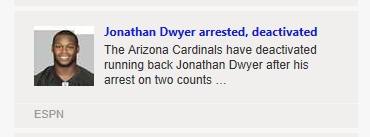
The future is here today. The good news? Evidently someone else came back in time and trained our law enforcement and NFL teams on what to look for. Check out this headline I came across today:

Arrested_Deactivated

Take that, Skynet!

(The ellipses undoubtedly continue on to say “…of impersonating a human being with the intent to kill Sarah Connor”)

Posted in Random Musings | 2 Comments

Book Review – Five Kingdoms: Sky Raiders, by Brandon Mull

Brandon Mull has a new series, Five Kingdoms, out. The first book, Sky Raiders came out earlier this year, and the second, Rogue Knight is due out in two months. We recently got our hands on Sky Raiders and read it as a family.

The premise is that a boy named Cole and his two friends wind up in an unknown world known as The Outskirts after being ambushed by slavers in a haunted house. Cole is forced to leave his friends when he is sold to the Sky Raiders, a gang of salvagers who loot the sky castles beyond the Brink. He makes some new friends and allies only to find out one of them is central to a looming battle for control of the Five Kingdoms. But Cole himself may hold more potential than anyone realizes.

In his Author One-on-One on Amazon.com, Mull describes the series this way: “With Five Kingdoms, I wanted to bring together much of what I do best as a writer into one place. I wanted to merge some of the fun I put into Candy Shop War, with the discovery and adventure from Fablehaven, with some of the big world-building like I did in Beyonders. I wanted to create a world that opened up story possibilities I haven’t seen before.”

That describes it pretty well, actually. The world itself is quite interesting, and there is certainly a lot of adventure. There’s a sense of danger, as well, but the tone of the novel is certainly more Candy Shop War than Beyonders, and the level of intensity, so far, is below that of Fablehaven. And, I also have to add, the setting is more geared to a middle-grade audience than adult (as it should be, I admit grudgingly). Of course that may change. Each of the five kingdoms uses a different type of magic, and we only see one of them, Sambria, in the first book. The mood there is somewhat whimsical, though there’s certainly something darker lurking about the edges.

My kids enjoyed it, and my youngest already has his name on the waiting list for the next book at the library. I’m finding it enjoyable enough, though it’s no Beyonders, which I thoroughly enjoyed, probably because it was more mature in its themes and tone. Mull does a good job of making his main characters seem like ordinary kids, with both strengths and weaknesses. Cole does some amazing things, but we feel as though he’s rising the occasion with a degree of luck rather than because he possesses any larger-than-life abilities. He is continually torn between rescuing his friends from slaver and sticking with his new friends through their pending dangers, which feels right. While it may be convenient for other writers to have their characters essentially forget their old life and adopt their new one, that’s not realistic, at least not this early on in the story. One of the most interesting things about Cole is watching him balance accepting his current reality with holding on to hope.

You can always count on Mull to deliver the “coolness factor”, of course, and Five Kingdoms comes through in spades. The sky castles alone are a source of cool we don’t get to explore enough, but Cole’s jumping sword, another character’s magic rope, and some of the magical creations they encounter are all ample proof that Mull hasn’t lost his touch. He knows what’s cool to kids, and you can tell he finds it every bit as cool himself.

For all that, though, Sky Raiders feels like an introduction–and probably it is. We’re still getting the sense of the setting, the stakes, and the characters. There’s ample plot line to pull things along, but by the end of the book you realize the stakes are higher. It may also be that the primary plots of this book are initially weak. Yes, we know Cole wants to rescue his friends, and his new friends are headed into danger, but these objectives are largely vague. We don’t know what Cole needs to do to free his friends–we just know it’s highly unlikely he’ll succeed at this point. And thus far his new friends are largely reactive, trying to stay alive, not pursuing a particular goal. That goal takes shape by the end of the book, but as I said, it leaves this book feeling like an introduction with enough plot thrown in to keep things moving.

For kids this won’t be a problem. For an adult it’s only something you notice in passing. I’d probably have noticed it much less if I wasn’t simultaneously reading two other novels with all the plot motion of glaciers.

If you liked Candy Shop War you should enjoy Five Kingdoms. If you enjoyed Fablehaven, be prepared for a rather different feel, but otherwise a comparable experience. If you enjoyed Beyonders, be prepared for lighter fare. There is still a weight to it, but so far you don’t feel it much.

As I said, I enjoyed it. I hold out hope it will get “meatier” was we get deeper in, but it’s a fair beginning. It’s a fun enough ride that I’m happy to go along with my kids.

Posted in Reviews | Comments Off on Book Review – Five Kingdoms: Sky Raiders, by Brandon Mull

Conflicted interests

Being a small business owner myself, I like to support small businesses whenever I can. In some things that’s a lot easier than others. For example, I’m something of a gamer. I enjoy board games, card games, pencil-n-paper RPGs, etc. For the most part the games I enjoy are not something you find in mass distribution. With a few exceptions you won’t walk into Target and find the games I play. You’ve got to find small businesses to carry them.

In previous towns I lived in that hasn’t been a problem. There’s usually only one store in the entire town, or at least close enough to me that I would be inclined to go there. But the longer I live in Sandy the bigger the problem grows. I’ve found at least four small businesses within a decent range that carry the stuff I like, and they all have at least some overlap.

One has the misfortune to be located in the mall. I avoid the mall as a general rule. It will be difficult for them to get my business. On the other hand, if they’re able to survive at the mall, they’ll probably be okay without my business. They’re more of a general toy store, too, but their selection of board games is pretty good.

The second is primarily my source for Warhammer Fantasy miniatures and supplies. They’ve also got the nicest older gentleman running the store who, if I’m not careful, I could end up talking to for hours.

The third is the best source of Pokemon I’ve seen in a small business. Target was our main supplier until we discovered this store. And Target seems to get a wider selection of box sets and the like, too, which is problematic. They do carry other games, but they do seem rather focused on a few core games, in which I have little interest so far.

The fourth is mostly dedicated to board and card games, like “Ticket to Ride”, or “Carcassone” and the like. They dabble insignificantly in Warhammer, and recently eschewed Pokemon. Their selection is fairly broad, and they have a game area where most of their games can be tried.

So what’s the trouble? 1) There’s no one-stop-shop that meets all my needs, and 2) I can’t support them all, as much as I may like to. Two of them I found the same day, which caused no small amount of consternation. They’re all run by nice people, and I want them all to succeed.

There’s a fifth store in my area I’ve yet to make it to. That’s probably for the best. I clearly take this sort of thing far too personally. It’s doubtful my patronage will make or break any of these stores, but I’ve lived places where good stores have gone under, leaving a massive void. I’d hate to see that happen, too. The one thing by far worse than having too many options is having no options at all.

Posted in Business | 1 Comment

The death of adulthood

A. O. Scott has an article in the New York Times discussing the death of adulthood in America. He makes an interesting case, even claiming that American literature has been curiously “adult free”. But, as the bulk of his evidence comes from entertainment, I think he misses the mark. Worse yet, he embraces his thesis as inexplicably, intrinsically good:

I do feel the loss of something here, but bemoaning the general immaturity of contemporary culture would be as obtuse as declaring it the coolest thing ever. A crisis of authority is not for the faint of heart. It can be scary and weird and ambiguous. But it can be a lot of fun, too. The best and most authentic cultural products of our time manage to be all of those things. They imagine a world where no one is in charge and no one necessarily knows what’s going on, where identities are in perpetual flux. Mothers and fathers act like teenagers; little children are wise beyond their years. Girls light out for the territory and boys cloister themselves in secret gardens. We have more stories, pictures and arguments than we know what to do with, and each one of them presses on our attention with a claim of uniqueness, a demand to be recognized as special. The world is our playground, without a dad or a mom in sight.

I’m all for it. Now get off my lawn.

This does not sound fun for me, and for any other adult. Putting the inmates in charge of the asylum–or the kids in charge of the household–is recipe for disaster, not for “authentic cultural products”, whatever that’s supposed to mean. Are there “inauthentic cultural products”?

But what Scott overlooks entirely is that culture and society extends beyond popular media. There are plenty of adults left in America. We’re just not interesting. No one wants to watch us. They don’t make television shows about real families unless they first inject them with inauthentic cultural products to make them more racy, controversial, didactic, ironic, or sensational. The reality is that adults make for boring entertainment, even in reality shows. Even such odd cultural artifacts as “Duck Dynasty”, while about as close as the Entertainment Industry gets to showing real adults, derive their watch-ability from emphasizing the ways the Robertson family are different from the TV execs’ image of “mainstream society”, even while they accidentally present a family quite relatable to the adults in the room. I suspect that the reasons the network put them on the air and the reasons they’ve become a hit do not coincide overly much.

Scott bemoans (he claims he doesn’t, then protests too much) the appeal of Young Adult literature as evidence of his thesis. Again, he fails to understand, even though (or perhaps because) he’s a film critic. If adults are reading YA–and not just to see what their kids are reading–it’s because it’s escapist in nature. Teens read it because it depicts people like them. Adults read it because it depicts people not like them, yet simultaneously validating their adulthood. More often than not, the teen protagonists in these books succeed because they adopt adult behaviors, not by becoming increasingly the “typical teen.” Katniss Everdeen takes a stand and fights for what matters to her; she doesn’t retreat screeching to her room, refusing to come out until it’s all over. Au contraire, from the beginning of the first book she is the adult in their family, forced to be one because her mother refuses to be. It’s a validation of responsibility, maturity, and doing what needs to be done, not a paean to permanent adolescence.

Could it be that YA literature is so popular because it’s one place where teens can find role models of adult behavior? Mainstream adult entertainment is increasingly not the place to look for that–I’ll give Scott that. “Breaking Bad,” “Game of Thrones”, etc., are all places to look for grown-ups behaving badly, not mature, moral role models.

In crafting his conclusion Scott betrays himself. What starts out as a sober questioning of what happened to adulthood culminates in a gleeful knifing of the cooling corpse. Adulthood is dead, and he’s glad. He wants to be one of the kids. What might have been a serious examination of the decline of American culture instead becomes a self-congratulatory fluff piece with temporary detours to lay offerings at the altars of “men are pigs” and “Feminism rocks”. The height of civilization, he appears to believe, is to toss responsibility and maturity to the wind and spend all day and night in the Beyoncé Nightclub of Eternal Youth.

But since he likes to discuss literature, let’s mention one particular book–a YA book to boot–that he notably avoids: “Lord of the Flies”. Scott avoids this one on purpose; it’s the antithesis of what he seems to believe–putting the children in charge leads to a degradation of civilization and a return to barbarism, not some Romper-Room utopia. But while “Lord of the Flies” shows what happens when two tribes of children compete, it does not show what happens when the tribes of children encounter adults. Assuming the adults don’t just capture the kids and try to reform them, they’d be easily enslaved or wiped out.

America does not exist in a vacuum. There are other countries out there. You can debate whether those countries represent adults or other children all you want, but you cannot debate that not all of them have compatible objectives with the U.S. (though you can also argue that their desire to destroy us runs parallel with our desire to destroy ourselves). If they are children, then Piggy will only be the beginning of those killed. If they are adults we will be easy pickings. You don’t want to be the only country of hedonist children in a world of hyena children or wolf adults. You won’t exist for long.

Oh sure, there is no arguing that America is strong. But I think we may be facing a test of our childish resolve in the form of ISIS. Whether they are children or adults is irrelevant. They are sadistic, fanatical predators, and they are purposely trying to break our will. If we succeed against them it will not because of the perpetual children among us. It will be because there are still enough adults willing and able to stand up and protect the children from themselves. Only the adults have a chance of defeating such an enemy without becoming them. Children may learn to fight back, but they do so by returning violence for violence, depravity for depravity, in an ever-escalating game of one-downsmanship from which it is difficult to recover.

Fortunately for us all, there are still adults to be found and–at least for now–relied on. Unfortunately, the children relentlessly mock and shame the adults, trying to wear them down into becoming like them. It’s only a matter of time before the adults either give up and join the children, or give up and leave the children to their authentic cultural products and their killing fields. My only question is where, in a world of children, can the adults safely hide?

No, Mr. Scott, it will not be a lot of fun. Why don’t you take your ball and go home. You’d better hope there’s still a mommy to kiss it and make things better.
Posted in Random Musings | 2 Comments